

One Less Obstacle for High-Speed Rail
FRA is trying to measure the right thing in the right way

Sometimes good transportation policy isn’t about announcing another billion-dollar grant or cutting a ribbon. Sometimes it’s about noticing that a rule written half a century ago doesn’t make much sense for the technology we’re trying to build today and fixing it before it becomes a problem.
The Federal Railroad Administration is proposing to do exactly that with its rules governing train noise, issued earlier this week.
The issue is pretty straightforward. America’s existing railroad noise standards grew out of research done in the 1970s, when the maximum allowable train speed was 110 mph. They were written around the kinds of locomotives and railcars operating at the time.
Back then, nobody was contemplating trains running at 200 or 220 mph...that was for other countries. Most of the conversations in Official Washington during those years were about whether we should have an Amtrak at all.
This turns out to be pretty important because the source of train noise changes as trains get faster. At conventional speeds, much of the sound comes from propulsion systems and the interaction between wheels and rails. Above roughly 160 mph, aerodynamic noise increasingly takes over. Air moving around the train itself becomes the dominant source.
So, applying a 1970s-era noise standard designed around conventional trains to modern high-speed equipment creates an obvious problem.
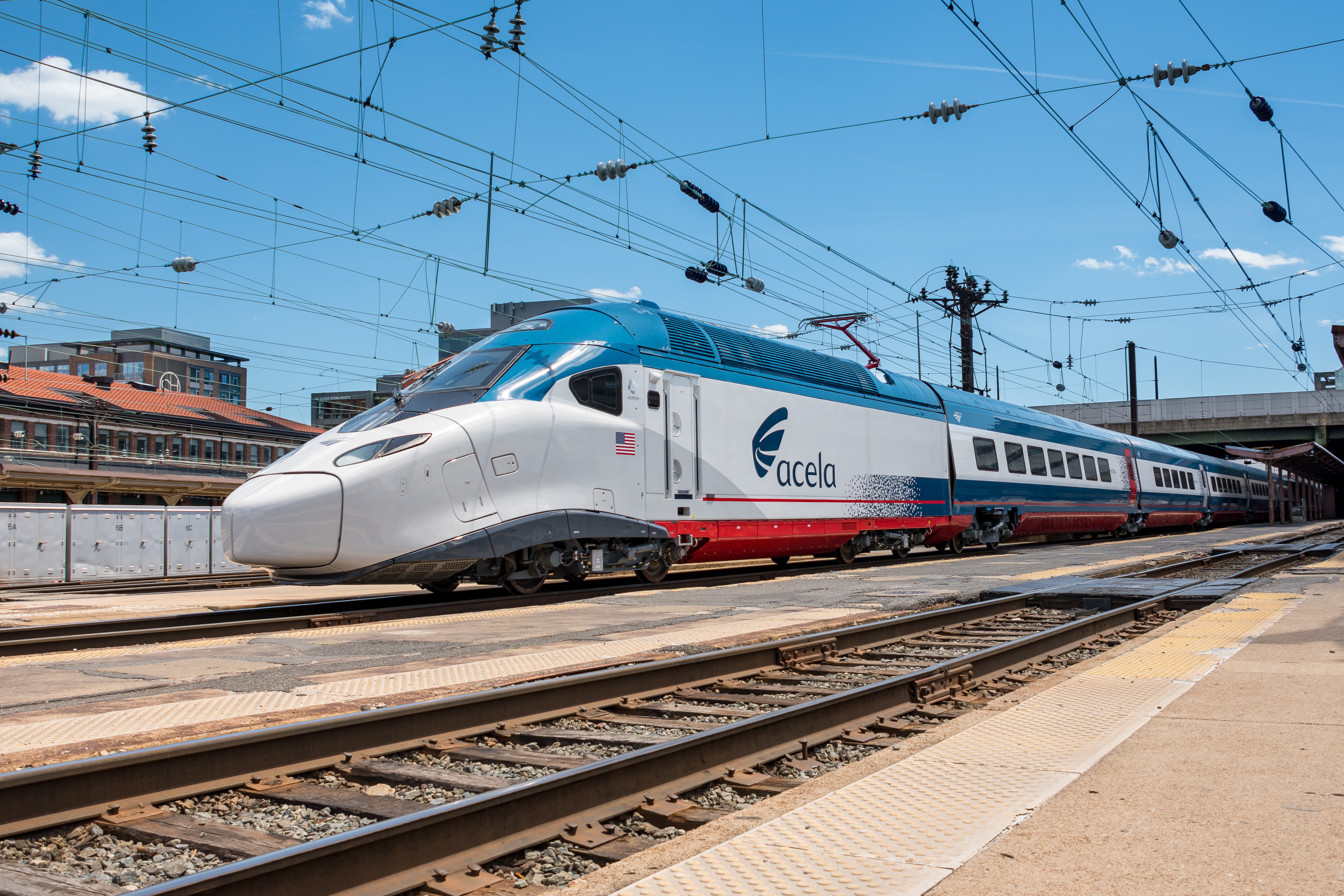
Image: Amtrak Media
Congress actually recognized this in the Infrastructure Investment and Jobs Act, which passed in 2021 and then-President Biden signed into law in November of that year. IIJA gave the Department of Transportation authority to develop standards specifically for trains operating above 160 mph. FRA’s new proposed rule is the result.
Under this rule, trains operating above 160 mph and up to 220 mph could use an alternative noise standard designed around the actual characteristics of high-speed equipment. Operations above 220 mph would have a separate special-approval process.
Now, let’s cut off one objection right now: this isn’t a decision to stop protecting communities from excessive train noise. The existing standards remain in place for operations at 160 mph and below, and high-speed operators could continue using the existing standards if they chose to do so.
Instead, in our view, FRA is trying to measure the right thing in the right way.
There’s another part of the proposal we particularly welcome. FRA looked at how countries that actually operate high-speed rail deal with this issue, including Japan, China and European Union nations, and proposes adapting the European noise-emission standard to the U.S. regulatory framework. Now that’s the kind of approach we’d like to see more often.
The United States doesn’t need to reinvent high-speed rail. Other countries have been building and operating these systems safely and successfully for decades. Where their standards and practices make sense here, we ought to learn from that experience rather than insist on developing uniquely American requirements simply because that’s how we’ve always done things.
We’ve been down this road before. FRA’s Tier III passenger-equipment rules helped remove another major regulatory mismatch by allowing modern high-speed trainsets designed around international safety practices to operate in the United States, rather than forcing manufacturers to redesign proven equipment around older American requirements. This feels like another step in the same direction.
I don’t want to exaggerate the importance of the noise rule. I don’t know of any U.S. high-speed rail project that has been stopped, or even substantially delayed, because of the existing standard. There might be, and if there is, please put ‘em in the comments and tell us about them. For my money, though, there are plenty of bigger obstacles confronting high-speed rail development in this country, from project costs and permitting timelines to funding and political commitment. But, that’s not an argument for leaving a known problem sitting there, so by all means let’s rip down this arbitrary barrier.
FRA estimates that the proposed change would produce about $66 million in net benefits over 30 years, largely by avoiding modifications to internationally proven high-speed equipment that might otherwise be necessary to comply with a standard never designed for it in the first place.
More importantly, FRA is doing something I think our Federal government agencies don’t always get enough credit for doing: looking ahead. Today, no passenger train in the United States operates above 160 mph. But projects now being planned are intended to do exactly that, and the Next-Generation Acela equipment being fielded today in the Northeast Corridor could do it today if the tracks were straight enough. Better to make sure the regulatory framework is ready before those trains arrive than discover afterward that a rule written for the railroad technology of 1975 has become one more expensive problem somebody has to solve.
High-speed rail in America still faces plenty of hurdles. There’s no reason to keep the unnecessary ones.